What Happens When Plastic Water Bottles Sit in the Sun?
Charleston's Summer Heat May Affect More Than Just the Temperature of Your Water
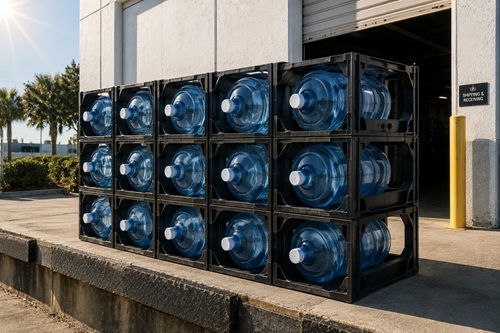 You've probably seen stacks of 5-gallon water bottles sitting on loading docks, delivery trucks, or outside storage areas at some point.
In Charleston's summer heat, it's a fair question to ask: What happens when those large plastic water bottles sit in the sun for hours, or even days, before they reach your office?
While bottled water is generally considered safe when stored properly, research suggests that prolonged exposure to heat can affect both water quality and the plastic container itself. That's one reason many businesses are rethinking how they provide drinking water to employees.
Why Heat and Plastic Can Be a Concern
Whether it's a single-use water bottle or a reusable 5-gallon water jug, heat can impact plastic over time.
Many water containers are manufactured using plastics designed for food and beverage use, but studies have found that elevated temperatures may increase the migration of certain compounds from plastic containers into the water. One of the most commonly studied substances is antimony, a compound used in the manufacturing of some plastic bottles. Research has shown that antimony levels can increase when bottled water is stored at higher temperatures for extended periods, although levels often remain below current regulatory limits.
This doesn't mean every bottle exposed to heat becomes unsafe. However, most experts agree that water is best stored in cool, shaded environments whenever possible.
Think About the Journey Your Water Takes
Before a 5-gallon bottle reaches your office, it may spend time:
• In a warehouse
• On a loading dock
• In a delivery truck
• In a storage area
• Waiting for installation or replacement
During Charleston's hot summer months, those environments can reach temperatures well above 100°F. Researchers have found that elevated temperatures can accelerate changes in plastic materials and may increase the migration of certain compounds into bottled water over time.
Even if the water remains within regulatory guidelines, heat exposure can affect taste, freshness, and the overall drinking experience.
What About Microplastics?
In addition to concerns about chemical compounds from plastic containers migratinginto the water, researchers have increasingly focused on microplastics and nanoplastics found in bottled water.
Recent studies have identified tiny plastic particles in bottled water products, leading to growing interest in how plastic packaging affects long-term water quality. While scientists continue to study the potential health implications, many consumers are looking for alternatives that reduce their exposure to single-use plastics altogether.
Why More Businesses Are Moving Away from 5-Gallon Water Jugs
Traditional bottled water systems have been a workplace staple for decades, but they come with challenges:
• Plastic bottle storage
• Heavy lifting and bottle changes
• Delivery scheduling
• Storage space requirements
• Concerns about water quality during transport and storage
Many businesses are looking for a more convenient solution that eliminates these concerns altogether.
A Better Alternative: Water That Doesn't Sit in Plastic Bottles
At HYDRATE of the Carolinas, we provide advanced reverse osmosis water systems that produce highly filtered drinking water directly at the point of use.
Instead of water sitting in plastic containers while being transported, stored, and delivered, our systems filter water on demand through your existing water line.
Benefits include:
• No bottle storage
• No heavy lifting
• Fresh, highly filtered water available anytime
• Reduced plastic waste
• Great-tasting water employees actually enjoy drinking
For businesses throughout Charleston, Mount Pleasant, West Ashley, Summerville, and the surrounding Lowcountry, filtered water dispensers offers a cleaner, more convenient way to provide drinking water.
The Bottom Line
Leaving a 5-gallon water bottle in the sun doesn't automatically make the water unsafe, but prolonged heat exposure can affect water quality, taste, and the potential migration of certain compounds from the plastic container.
In Charleston's hot and humid climate, it's worth considering how your drinking water is stored before it reaches your office.
That's one reason many businesses are replacing bottled water delivery services with modern reverse osmosis water dispensers that provide fresh, filtered water on demand.
Learn more about your options with Hydrate of the Carolinas and ask about our 1-week FREE trial.